Seattle Folklife Festival packs hundreds of performances into the long Memorial Day Weekend at the Seattle Center each year. It always seems like a great idea, a friend said to me when we bumped into one another that Sunday afternoon amid elephant ear and lemonade stands. It’s also quickly overwhelming. There’s simply too much to choose from.
I’d just read the May Games and Morris Dance chapters in my ongoing perusal of Ronald Hutton’s The Stations of the Sun, so was excited to catch Morris dancers capering and jingling alongside the jug bands, steel drum troupes and sea shanty meet ups at Folklife. In his book, Hutton unravels the complexities of Morris origins and tracks the ebb and flow of popularity and re-invention through history. Seattle Folklife is focused on the “continued growth and development” of folk arts so requires no provenance for participation.
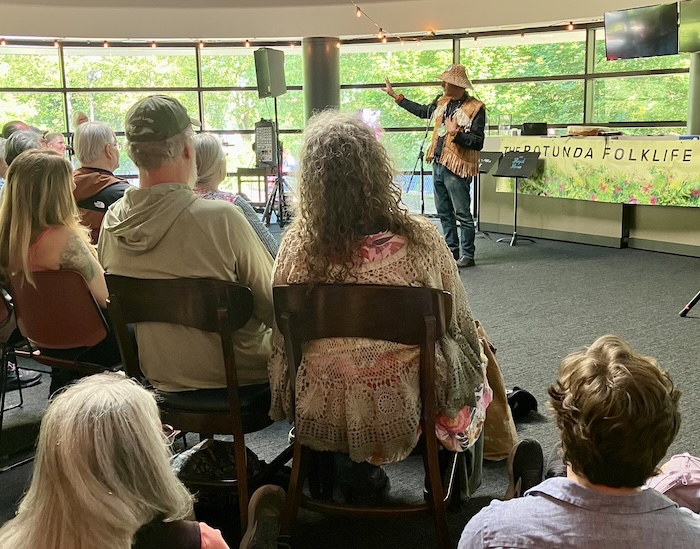
When overwhelm hit me, I tucked away to a quieter corner of the busy event campus for a storytelling showcase hosted by the Seattle Storytellers Guild. The four tellers spanned a breadth of styles and subjects.
There was a personal experience tale about growing up in Florida. There was a brief history of German immigrants in Texas. There were traditional tales from the Coast Salish people. And there was a collection of folktales curated to encourage localvore eating and civic participation.
One of these last tales, told by Bowen Lee, recounted when mosquito, bedbug, hummingbird, and the very smallest crab and snake worked together to save their community from a tyrannical giant. It was a great demonstration of how fun stories can smuggle in bigger meanings. A timely tale that I used as an example in my opening workshop at Greenwood Senior Center.
Storytelling isn’t limited to performances at festivals with seated audiences and stages. We tell stories all the time to explain ourselves and what we think people should pay attention to in the world.
Consider the stories you tell most frequently. Maybe the origin of a nickname or a tale about a big transition in your life. Consider a story you told recently. Maybe a story to honor someone at a graduation or a birthday or a memorial. Maybe you told an anecdote to help someone through an experience similar to one you survived. We are all storytellers.
inspiration this month: garden reading
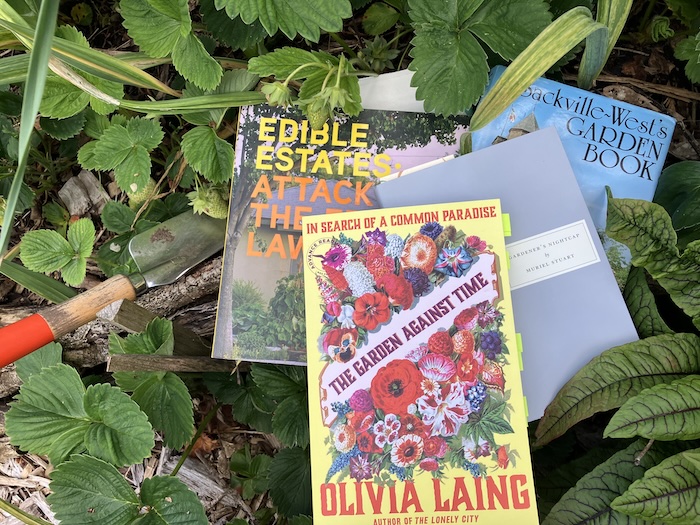
Every year I tell my partner this will be the summer I do more relaxing in a hammock with a book. And this really is that year. I do have to quell tides of panic about the encroaching bindweed and press down guilt about leaving the garden beds to volunteer calendula and hollyhocks. But I have been stepping outside with a book most days that we’ve had sunshine here in Seattle’s finicky June.
A number of these books I’ve read in the garden have been about gardens. I predict Olivia Laing’s The Garden Against Time will make my best-of-the-year list. In the book she explains how she spent the Covid pandemic resurrecting the garden at her new house. Laing reflects on our relationship to spaces we cultivate and the idealism, and privilege of making gardens. She investigates perceptions of “paradise,” from Milton to William Morris and Derek Jarman. She traces the development of “landscaping” from painting and digs into thorny connections between gardening and colonialism. I highly recommend the book, whether or not you keep a garden to read it in.
What are you reading these days? Drop me a note and let me know.