A major two-year survey of contemporary UK folk culture coordinated by the Centre of Contemporary Legend at Sheffield Hallam University ends next month. The findings show that folklore is alive and well.
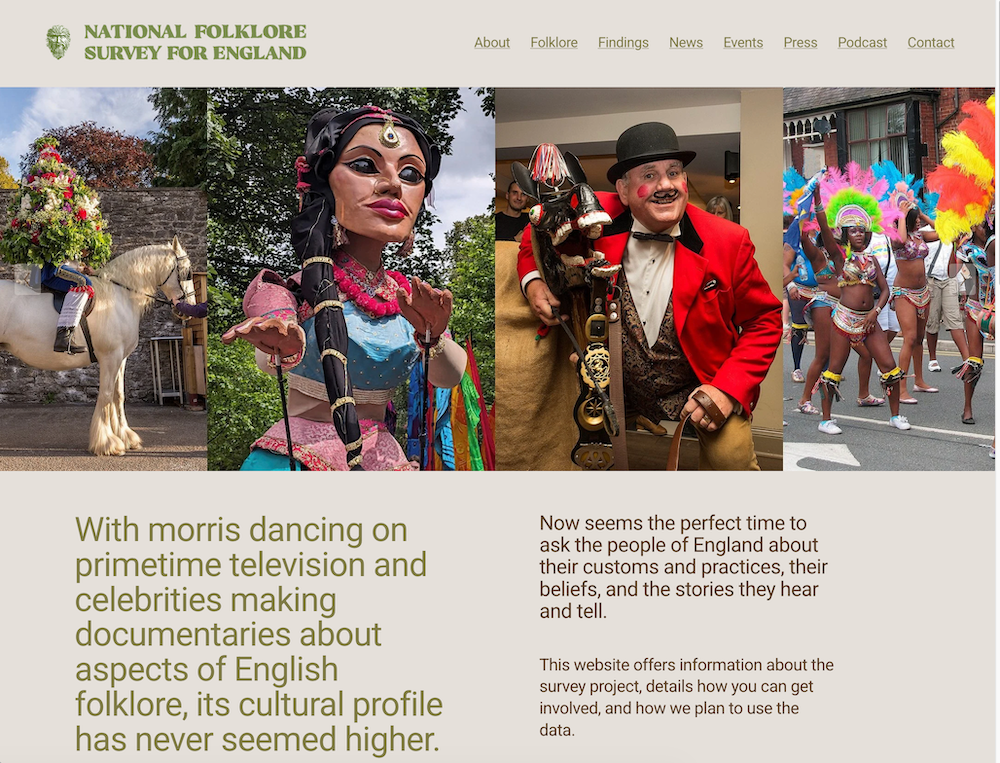
At the beginning of my second 4Culture storytelling workshop last month we started with definitions. Myth, fairy tale and legend are all types of folktales. They are variants of narrative folklore. Of course, terms are squirrely and develop new usage over time. We saw this recently with the fabled life of Dolly Parton. Folklore is more than stories. There’s material folklore like woodcarving or quilting, there’s folk dance and music, festivals and foodways. In workshops I remind participants that we are the folk and when we pass things along to one another, we perpetuate folklore.
Folklorists conducting the National Folklore Survey saw a rise in seasonal custom participation in the UK (like the Mari Lwyd hobby horse that we looked at in January) and increased interest in Paganism. While summarizing some of the study takeaways, Libby Brooks revealed in the Guardian’s Friday the 13th newsletter that 1/3 of all respondents believe in ghosts and younger people were twice as likely to believe in curses and conspiracies than older participants.
While folk practice and belief can be connected to nationalist or hyper-local activism, folk revivals aren’t necessarily regressive. The study found that young people drove much of the folk practices revival. They hoped to positively connect with the environment and one another. Revivals often included critical review of customs which updated and made them more inclusive. Morris Dance, for example, garnered wider gender representation.
If you’re interested in the findings, you can check out the National Folklore Survey for England site.
What’s some folklore you’ve seen on the rise? Do you participate yourself?
inspiration this month: Adaptations
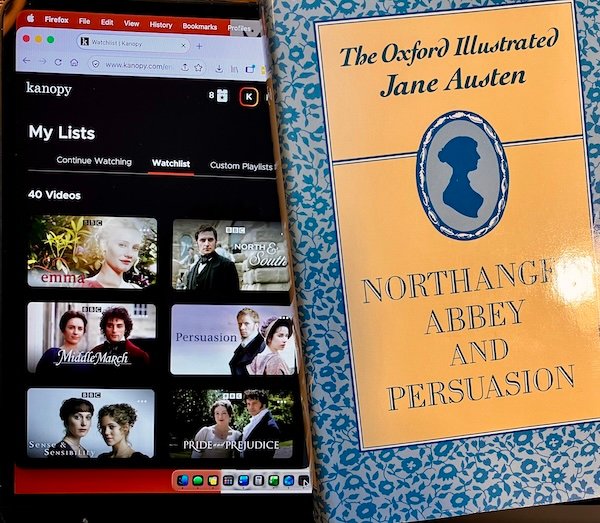
I haven’t read Jane Austen’s Pride and Prejudice since I was nineteen. But I did just binge the 1995 television adaptation by Andrew Davies, staring Colin Firth and Jennifer Ehle. I first watched it while on the road for the trade show season. Then while in bed with the head cold I picked up during trade show travel. The third watch was more intentional and focused on the delicious character nuance and gestures of class.
I’ve not yet read Austen’s final novel Persuasion, nor her fun take on gothic romance, Northanger Abbey. Having now watched the 2007 British television adaptations of both (Northanger adapted by Davies again and Persuasion by Simon Burke) I am pushing both books forward on my TBR pile for Austen’s astute economic investigation.
I might also need to re-read Pride and Prejudice before the forthcoming adaptation by Dolly Alderton, staring Emma Corrin and Jack Lowden.
Lowden also features prominently in another adaptation I’ve been following. While the Slow Horses TV series, based on the Slough House books by Mick Herron, may feel a world removed from Jane Austen there is a satisfying class commentary woven throughout.
Let me know if you have favorite adaptations you’d recommend!