Last year I caught an episode of the Myths and Legends podcast called Rat Race, which tells the origin story of the Chinese Zodiac and how the animal participants in the Jade Emperor’s Great Race each marked a year in a repeating 12-year cycle.
The most recent cycle started in 2020 with the rat, who in the story tricked his way to becoming the first animal in the calendar and made a life-long enemy of the cat. It’s a fun episode about each animal’s unique meaning and how they inform the years they rule. In the order they placed in the race:
- Rat – resourceful & clever
- Ox – dependable & strong
- Tiger – brave & unpredictable
- Rabbit – optimistic & shy
- Dragon – charismatic & intelligent
- Snake – shrewd & enigmatic
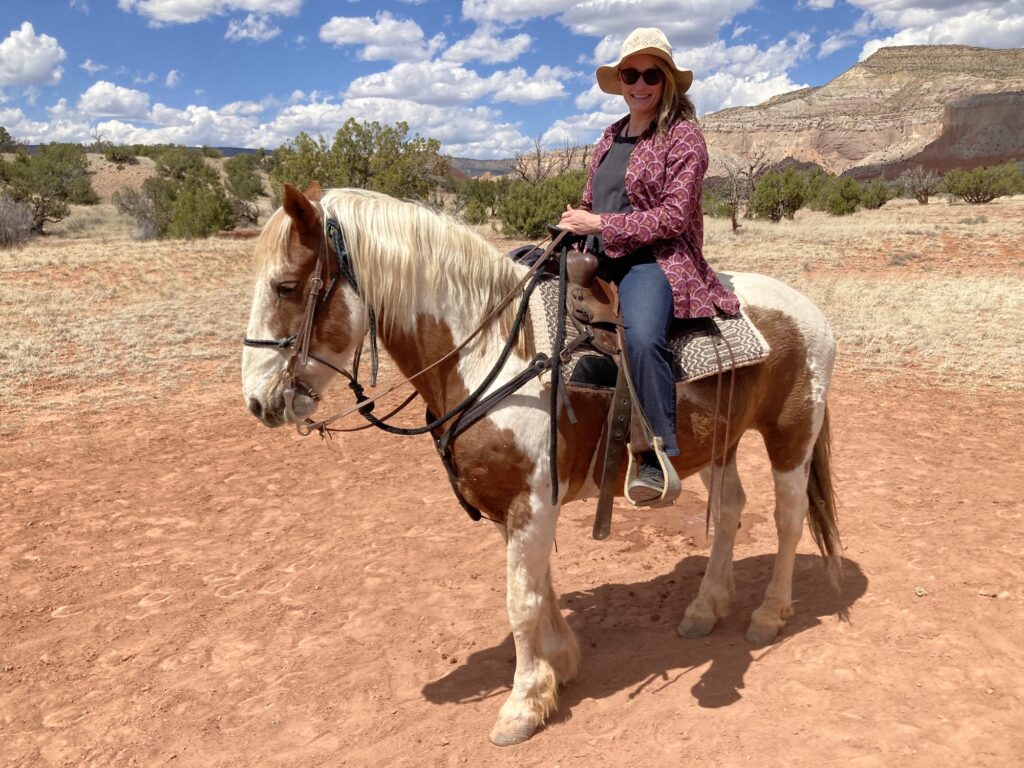
- Horse – energetic & direct
- Goat – calm & sympathetic
- Monkey – curious & inventive
- Rooster – hardworking & practical
- Dog – honest & loyal
- Pig – generous & outgoing
We have entered the year of the Horse. This reliable racer might have been last year’s animal, but in the Great Race story, snake hitched a ride on horse to get across the river and when horse shied from the reptile, snake took sixth place.
I poked around for other folklore appearances of the horse and found several named steeds of legendary figures like King Arthur or Helios, who rides the sun chariot across the sky. There were also several variations of water horse or kelpie tales ranging from mischievous to downright terrifying.
Also, spotted in the wild at Seattle Art Museum’s A Room for Animal Intelligence exhibition, the flying horse!
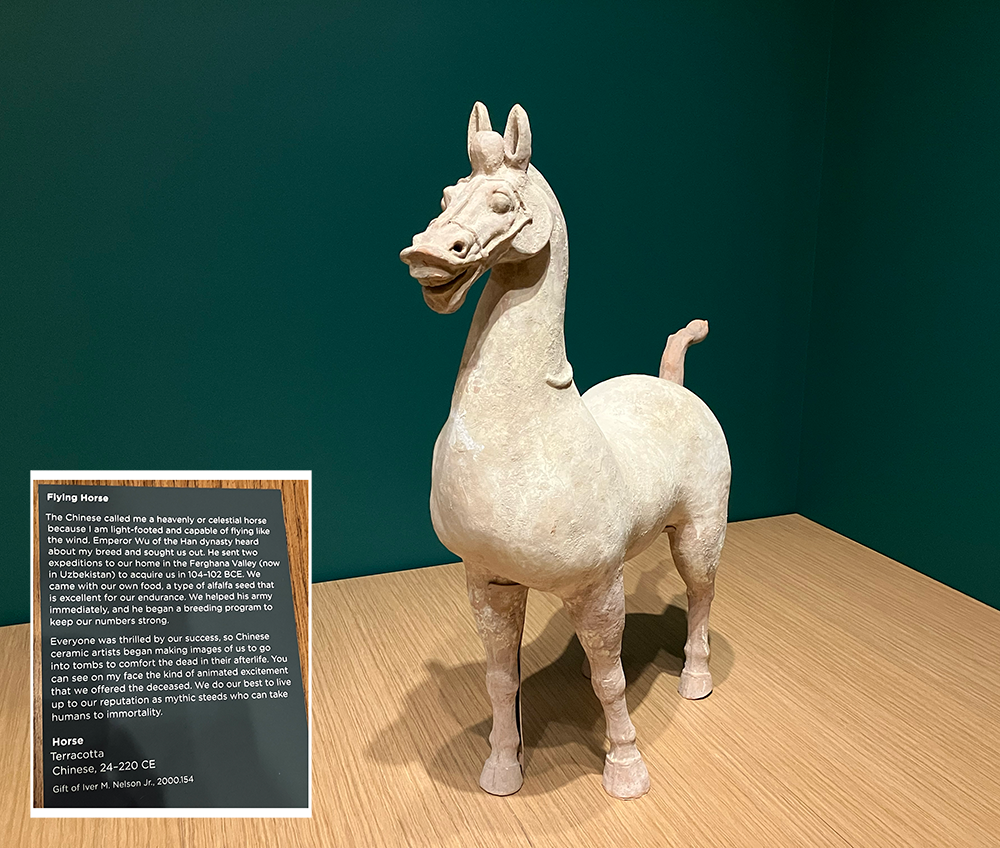
It was not winged like the Pegasus, but the Chinese Qianlima was able to travel a thousand-li (approx. 400 km) in a single day and was emblematic of “exceptional talent.”
Happy New Year, again!
inspiration this month: travel & stillness
My Bowie Book Club re-reading continues this month with The Savage Detectives, as Greg and I revisit one of the first books we read as a two-person book club over a decade ago. Revolving around a poetry movement in 1970’s Mexico City and launching out to a world-wide adventure, the book is a great alternative to Kerouac’s On the Road. More complex and sinister.
In preparation for my partner’s departure for a UK art residency, I started reading The Living Stones: Cornwall by Ithell Colquhoun. The artist’s affectionate post-war portrait of this distinct southwestern point of England is a little bit travelogue and a little bit homestead narrative and, so far, very engaging.
I read a New York Times interview with Casper Ter Kuile about the benefits of ritual and was curious enough to check out his book from the library. The Power of Ritual: Turning Everyday Activities into Soulful Practices takes a broad non-denominational look at the connections we make with ourselves, with others, with nature and with transcendence through repeated, conscious and intentional activities.
If you’d like to try Ter Kuile’s Technology Sabbath, keep scrolling…
Try Casper Ter Kuile’s Technology Sabbath ritual

In The Power of Ritual: Turning Everyday Activities into Soulful Practices, author Casper Ter Kuile is focused on activities we do repeatedly and with highlighted intention and attention. Walking my dog, washing the dishes or meditating can be either routines or rituals, depending on how I approach each. He cites Thomas Merton when pointing out that traditions can be vibrant, but convention is always passive and lifeless.
The author’s Technology Sabbath begins at dusk the night before and requires him to put aside all those useful and distracting tools we’ve become so dependent on. A Tech Sabbath isn’t just a day to put our cell phones in a drawer and power down our laptops though, it is a time to lean deeply into reflection and engagement in the world.
It is no good to spend the whole day thinking about the absence of our tools, Ter Kuile suggests doing creative projects, going on walks or just allowing ourselves to be bored. On page 72 he writes, “We can take time to ponder things, to think thoughts through to the end without interruption. In silence and solitude, we rediscover childhood passions. Sabbath is all about remembering who we truly are.”
During this Lenten month I’m giving it a try. Once a week turning off and allowing my multi-tasking, multi-tracking tendencies to slow down. Let the day naturally unfold. Rather than spiral into the black hole of internet scrolling when I get stuck, I can look up that word in a dictionary or find that bird I saw flitting past my window in the pages of a field guide. I haven’t decided how to handle listening to music yet. It is a process of considerations and reflections. And that is part of the point.