Whenever I’m in Baltimore, I visit the American Visionary Art Museum. The morning before my return flight to Seattle last week, I braved a summer downpour, hopped a water taxi across the harbor and dashed for the glittering mosaic sides of the museum. As I hoped, the galleries were full of interesting textures and materials, inventive shapes and colors and a big dose of inspiration.
The AVAM, founded by Rebecca Alban Hoffberger, was inspired in part by Jean Dubuffet’s Art Brut Museum in Switzerland. Hoffberger appreciated the avoidance of “art-speak” and the emphasis on expressing artists’ lives and visions in their own words.
The museum’s Visionary title, rather than Art Brut, Vernacular Art or Outsider Art (which is sometimes criticized as derogatory) is defined as “…art produced by self-taught individuals, usually without formal training, whose works arise from an innate personal vision that revels foremost in the creative act itself.”
The museum’s three buildings, tucked at the edge of Federal Hill Park, feature wide representation of intuitive painting, sculpture, textile and more.
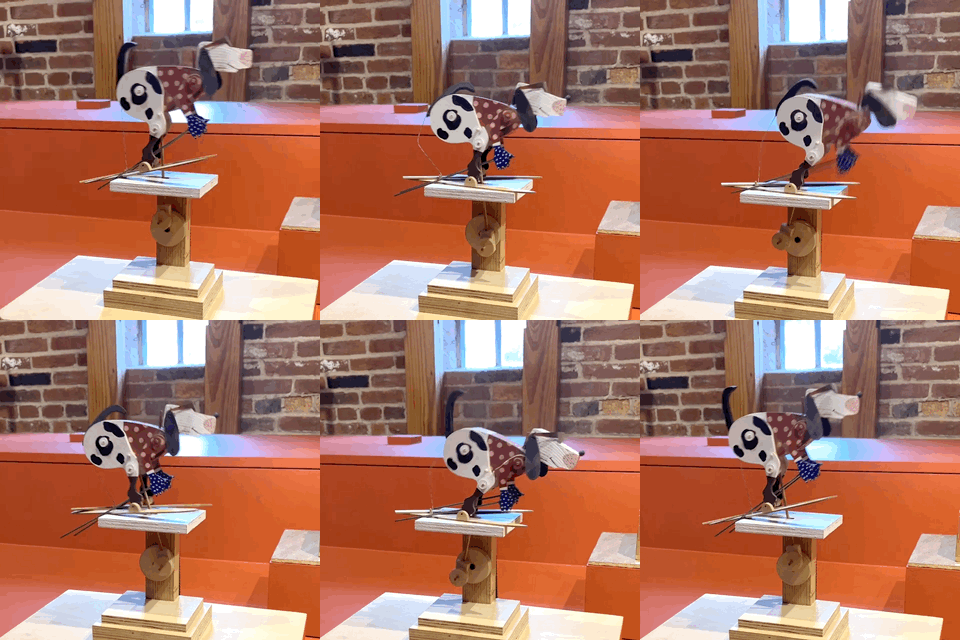
I checked in on the model of the Lusitania by Wayne Kusy (193,000 toothpicks). I visited my favorite wooden automata, which leap and fly and eat noodles with the push of a button (see Keith Newstead’s skiing dog pictured above).
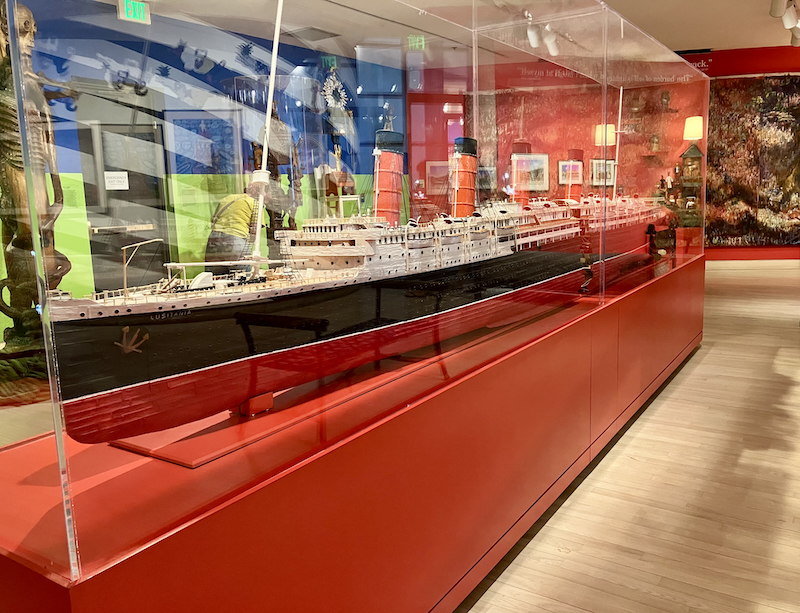
In addition to the permanent collection the 30th-anniversary special exhibition, Fantastic Realities, presented over a hundred pieces of sculpture, painting, collage and drawing. The museum hopes to remind visitors “…that sometimes the delightful, the absurd, and the enchanted lead us closer to the truth.”
inspiration this month: Enchantment
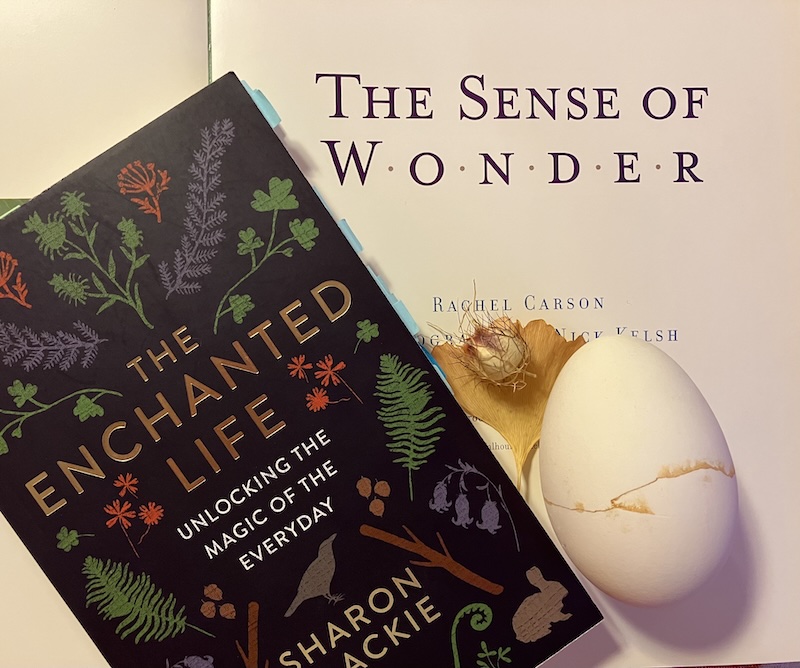
Leaning closer to truth by way of enchantment was the focus of some of my reading this month also.
Rachel Carson wrote her essay The Sense of Wonder in 1956. Part meditation, part activity guide for guardians of small children, the essay was inspired by Carson’s nephew. She was enchanted by his unbridled wonder during his visits to her rugged patch of coastal Maine. “It was good,” Carson writes “to see his infant acceptance of a world of elemental things, fearing neither the song of the wind nor the darkness nor the roaring surf.”
Carson demonstrates how the enthusiastic engagement of a child’s hands-on discovery can awaken our dimmed wonder. She charges readers to foster delight and inspiration in one another. “Those who dwell, as scientists or laymen, among the beauties and mysteries of the earth are never alone or weary of life.”
Sharon Blackie’s The Enchanted Life is also a manifesto on changing perspective. Through philosophers like William James, Husserl, Ponty and Val Plumwood, Blackie explores ideas of wonder and embodiment. By incorporating conversations with naturalists and storytellers she provides readers with a case for changing how we engage in the world. Her suggested activities help readers develop mythic imagination, map our relationship with place and not only consider how we actually spend our days but shift the pace of life. As Annie Dillard has reminded us, “How we spend our days is, of course, how we spend our lives.”
Blackie’s four components of an Enchanted life are:
- “It is founded upon a sense of fully participating in a living world…”
- “It incorporates feelings of wonder, and curiosity…to tolerate, even welcome, the presence of mystery.”
- It is “very much a function of our lived, embodied experience in the world.” Rather than “all in the head.”
- It is grounded in mythic imagination, “…acknowledgment of myth and story as living principles in the world.”
How do you find enchantment in your days?