My favorite part of workshop is hearing everyone’s story in the last session. I finished the first of my 4 Culture grant-funded workshops just after Summer Solstice. The stories that the cohort at Greenwood Senior Center told were appropriately inspiring for this bright time of year. Their heroes learned who to trust, how to move on from a not so happily-ever-after, how to escape the traps of outdated ideas and how to persist. The stories dealt with fear, sorrow, embarrassment and hope.
At the start of a workshop sometimes people’s nerves flare. Somebody might doubt their creativity or wonder whether they’ll be brave enough to perform. By the time we gather to share in that last session though, we’ve walked together through the elements of story and deeply processed our own. Janice, a storyteller from the Greenwood Senior Center workshop, kindly summarized the workshop progression as “discussion with great exercises and incremental steps to stretch imagination and ourselves.” By the last session there’s just no stopping the stories. They are eager to be told.
inspiration this month: Disability Pride Month
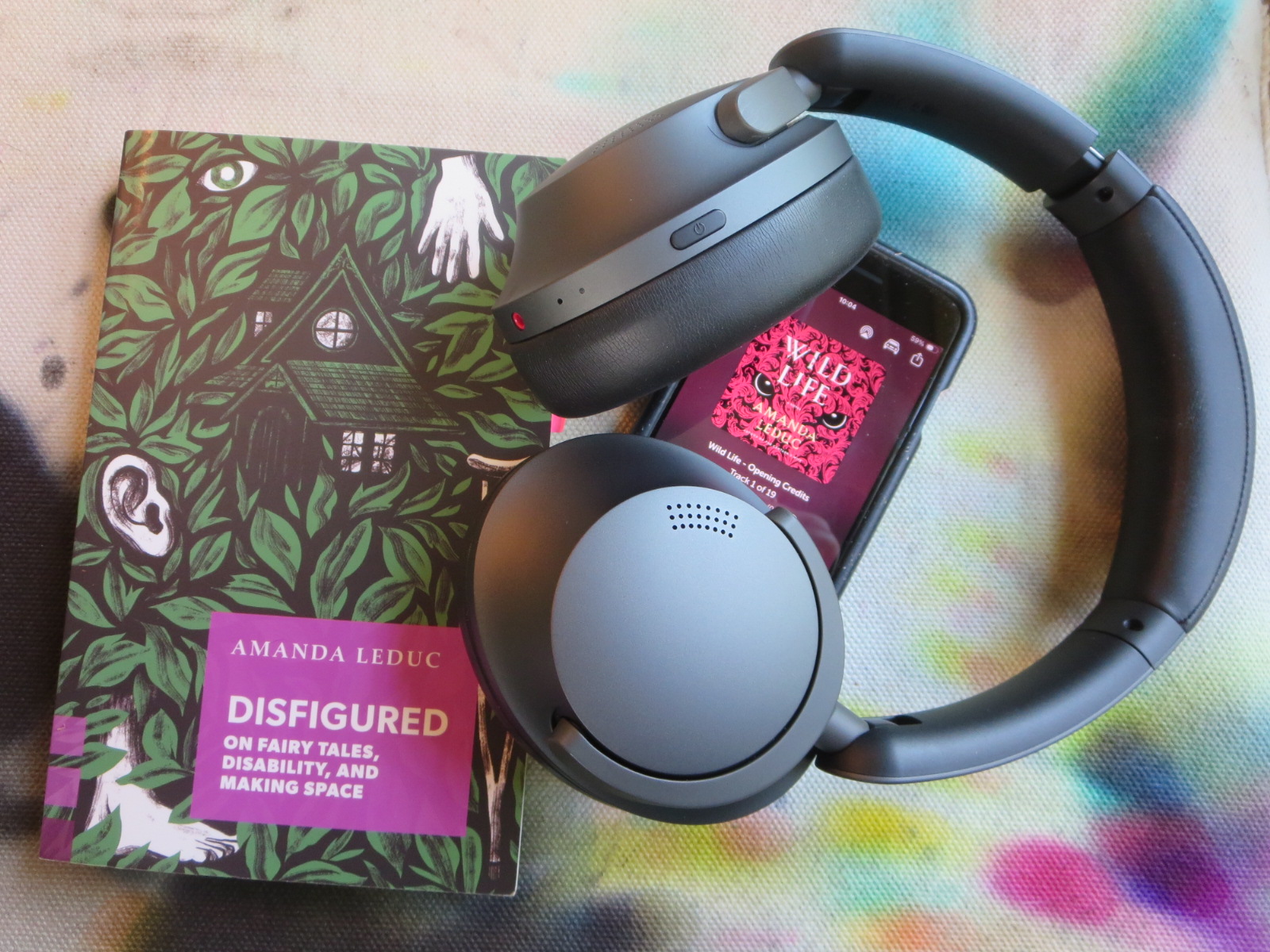
It was author Hillary Behrman (Lake Effect) who told me about Amanda Leduc’s book Disfigured: On Fairy Tales, Disability and Making Space. In one of those great synchronicities, I had JUST started Leduc’s novel Wild Life. Leduc is a disabled writer and a regular speaker on accessibility. This Disability Pride Month I have been on a Leduc marathon.
First, I experienced the wild ride of Wild Life (available in print if you’re in Canada and otherwise on audio at Libro.fm, where your listening supports local bookstores). The novel wends through several decades alongside a pair of talking hyenas who draw individuals together in surreal ways and unite against the very cult that the couple inspired and which has remained disturbingly fixated on them. I’ve already begun to recommend this book to anybody who will let me.
In Disfigured Leduc tackles the ableism of folktales from Oedipus to Snow White and the ways we perpetuate prejudice against different abilities and appearance through unexamined tropes. Leduc was particularly impacted by Disney adaptations when she was young. These feel-good versions softened the darkest elements of classic fairy tales but retained the underlying anti-disability slant.
“This conceptualization of disability—at best merely a metaphor for psychological ills that can be overcome, at worst a punishment or judgement that can be reversed through magical or spiritual means, though only if one deserves it—does a disservice to the actual lived experience of what it means to occupy a different body in the world.” (From Disfigured: On Fairy Tales, Disability and Making Space)
Yes, Leduc writes, fairy tales can be powerful coded messages “spreading encouragement and hope to the disenfranchised and delivering scathing indictment of authorial figures, all within seemingly innocent trappings.” But her critique remains a potent one. In these old stories too often “…it is never society that changes…It is almost always the protagonists themselves who transform in some way—becoming more palatable, more beautiful, more easily able to fit into the mould of society already in place.”
I just started the audio book of Leduc’s 2021 novel The Centaur’s Wife to get me through the second half of the month. Disability Pride Month started with the signing of the Americans with Disabilities Act in 1990 and is celebrated every July to promote identity, visibility and inclusion. If you want to learn more, one way is through the Seattle Cultural Accessibility Consortium. I did an audio describer workshop with SCAC last year and admire the work they do. They have a “Fundamentals of Accessibility” session on Zoom on July 22. It’s a 101 session about why accessibility matters, and types of accommodations for different disability groups. You can find information here.